You’ve been framed

Framing is used to present an event or story in a particular way. The media does this to portray stories to their viewers, readers, and listeners in a certain light. Whilst it can often be useful, it also has the ability to mislead what an event is actually about, and persuade peoples opinions.

I think a good example of media framing is how music festivals are portrayed in the news, especially in relation to drug use. The media would have you believe that music festivals are all about the drugs, with little security checks, and is a great danger to younger people.

However I just recently attended my first large scale music festival and it was far different to what the media would have you believe. The idea that you can walk into a music festival and find and take any drug you want is simply not true, whilst there is always going to be people consuming drugs, it is not easily accessible and around every corner as the media would have you believe.

There was also a large security and paramedic presence around the entire festival, and when people needed assistance they were attended to immediately. At no point was I approached to buy drugs, and I felt safe the whole time I was there. The number of tragic events that often happen at these music festivals are often in very small proportion to the amount of people who attend and remain safe.
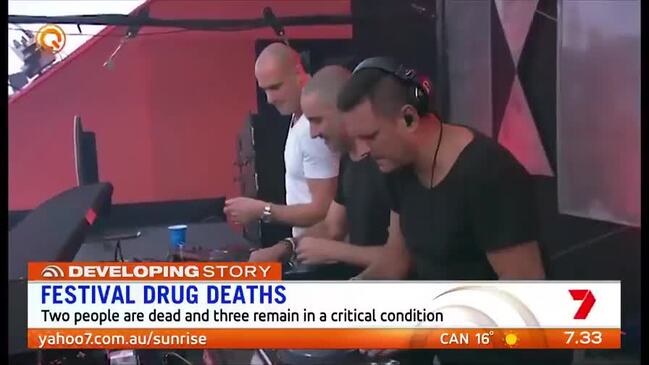
Image result for music festivals drugs news

This is why the way the media frames stories and events can often be misleading, and start a moral panic among those who are just viewing the story on a surface level. Whilst of course there is always some truth to a story, like the dangers of music festivals, the way the media frame it can often lead to a misleading understanding, and not provide a well rounded picture of events.

The media often frame stories to create a moral panic, and that in itself is not a safe practice for our society.

How memes change the world.

Memes were once seen as funny cat pictures, that 10 year old would see, laugh, and then wonder what exactly was so funny about it. Now meme culture and internet culture has changed, and created platforms for individuals to have serious impact in the world, such as the Hillary Clinton #draftourdaughters campaign run by Donald Trump supporters to sway the opinion of voters.

This begs the question of ‘who can we really trust’, is it someone running to be the president, or is it the internet users who expose said person? The answer is, well neither really, both parties lie and manipulate to try and gain an edge, and thus make a large mess of whats true and whats false.

It also makes you wonder just how far this could go, and how much the internet and people with no direct coloration to an event can have an impact on how it is seen by others. I think in future political parties and people of high influence will need to create some kind of stamp to show it is what they are truly saying or has come from them, almost like a watermark, but for life.

Memes and internet culture can be creative and funny, we just need to be sure not to give it too much power.

Coffee Shop of Today.

Jürgen Habermas, a German philosopher and sociologist made famous the term the ‘public sphere’, ‘the public sphere is an area in social life where individuals can come together to freely discuss and identify societal problems, and through that discussion influence political action. Such a discussion is called public debate and is defined as the expression of views on matters that are of concern to the public—often, but not always, with opposing or diverging views being expressed by participants in the discussion’ (Wikipedia, https://en.wikipedia.org/wiki/Public_sphere).

But what are the coffee shops of today? Well an actual coffee shop is one of them, as well as any social space in which one can interact and exchange ideas with another person, this can include the internet and social media also.

Personally, my public sphere where I am able to discuss things with my mates can vary. When people drink alcohol they tend to speak their opinion a little more, this is what makes catching up with my mates at a pub, club, or one of their houses so fun. There is something about having a drink with your mates and discussing life that is so wonderful, although the conversations may not be the most intellectual, they do create debate and further discussion within the group.

We also use social media to communicate, having a group chat with a bunch of mates in it. Using social media allows for everyone to still discuss, anywhere, anytime, and considering my group of friends all live in differing areas of western Sydney, it allows us to still chat without being in the same area.

Another place that may not be so obvious is when we play video games together like Call of Duty, whilst you may think we would be talking about the game as we play, what often happens is we will have conversation about a range of topics, whilst almost playing the game as a second thought.

In today’s world it is easier than ever to communicate with others, and share your thoughts and ideas, largely thanks to the internet. Whilst traditional places such as coffee shops and public spaces are still used to discuss issues with others, the internet has allowed people to communicate anywhere, anytime, with little effort.

I would not be surprised if one day, many years in the future, humans will evolve to no longer speak in person, but rather through screen.

Teamwork makes the dream work

In the days without internet, peoples content went through a gatekeeper, and editor, someone who can cut pieces and then distribute it to the masses, one to many.

Today people can upload content directly with weak or no gatekeepers at all, to show the full picture, not just snippets. This has allowed for what was the audience, to now be the creators, and work together to develop content, many to many.

Which then leads onto the examples of collective intelligence in the internet community, who can now harness people with different skills from right around the world, coming together to develop ideas and concepts.

This is a video I found which show just how powerful and influential the internet can be when used for the right reasons. It shows a group of people working together, taking bits of information from different sources, putting them together, and using their findings for good.

You also need to consider the lack of filter on much of the internet, which eliminates a lot of the #fakenews that legacy media put out, and holds them accountable to their reporting.

But I also wouldn’t trust everything on the internet.

#nottruereport

In a world where the internet runs supreme, and people have their own high quality cameras in their pockets, the amount of #fakenews that is generated has increased. But you could also argue for the other side, with individuals being able to record and publish their own video, it doesn’t allow media organisations to spin stories in a different or inaccurate way.

Which brings us to who actually owns the media, and the news programs we watch, listen to, or read. Up until 2017, the laws surrounding media ownership included the ‘two out of three rule’, which prevented a person from being able to control more than two of commercial radio, commercial television, or newspaper in the same license area. This along with the ’75 percent audience reach rule’, which prevented a person from controlling commercial television licenses whose combined license area population exceeded 75 percent of the population of Australia, these rules no longer apply.

These rules were put in place to ensure the Australian people received news from a wide range of sources, in an attempt to not allow one media organisation complete control over all news.

Which raises the question of who actually owns and controls the media we consume, and does it really matter?


https://www.gizmodo.com.au/2016/01/infographic-who-owns-what-media-in-australia/

The chart and link above shows that a lot of the Australian media is owned or co-owned by the same people and organisations, but does this matter? I personally think that this isn’t necessarily a bad thing, on one hand it allows for consistency and accuracy in news reporting, whilst a story may not be exactly correct, it is consistent, allowing for less confusion and all different kinds of information being passed on that is hard to follow along with.

What can also be considered is how news on social media should be interpreted. Facebook is notorious for people sharing fake news articles which are disguised as real, with a lot of people just reading the link headline and taking it as accurate news. Whilst on many articles in is clearly satire, some disguise it really well and can definitely fool readers.

This is why you need to be able to trust your news sources. I know I personally have relatively high trust in Australia’s verified news sources like channel 7, 9, 10, ABC, and SBS, but I also know that you should always take a story with a grain of salt, as you never know how accurate a report is, as well as what higher powers could be in play.

So basically, don’t believe everything you hear, read , or see kids.

In the Moment.

What we see, and how we see it can often be different. Many images can be interpreted in differing ways, and artists or photographers play into this, seeking to evoke different emotions, or make the viewer think deeper of the image.

I found the image below extremely interesting, seeing as this is a communication and media course, and we focus a lot on the social media aspect. I also found a website in which they break down social media use, and shows a stark difference in age and gender.

https://internetretailing.com.au/time-australians-spend-social-media/

The image above depicts a man being held down, unable to move, with social media platforms Twitter, Whatsapp, Instagram, and Facebook. He is laying on a smartphone and is unable to escape. This is the denotation of this particular image.

The connotation is that smart phones, social media, and the internet have all become so important in our lives, we can no longer escape from it. We are so dependent upon our smartphones for everything, that we cant escape them, we feel as though we constantly need them on us, constantly checking and connecting with the world.

Similar with the social media platforms, as a society we have become so dependent upon them, feeling as though if we aren’t connected 24/7 we are going to miss out. They begin to consume us, painting a picture in our mind of ‘if I don’t share this, or update my social media, no one is going to notice or care.’

I know I am definitely guilty of this, thinking about the perfect Snapchat story to post, instead of enjoying the moment for what it is. I think this is the main point, when you are so invested in your phone and social media that you begin to miss the things going on around you in your real life.

In essence, living in the moment.

Internet Factory

Back in the day, when life was simple, manufacturing companies produced products that were just that, simple. Simple in the fact that with little innovation from rival manufacturers, companies had the ability to mass produce products, giving everyone the same car, same clothes, same entertainment.

However this is no longer the case, largely thanks to the internet, it now not only companies producing for consumers, its individuals creating their own content to then share with others. It has bridged the gap between producers and consumers, with individuals having the ability to produce high quality content on their own like YouTube videos.

It also leads to content being continually developed and changed to suit different groups. An example of this is a meme, the original meme is modified and developed hundreds if not thousands of times to then be shared. This type of content is also far cheaper, and far quicker to produce than traditional methods.

You may not necessarily be able to physically build a car on the internet, but the internet can open up unlimited possibilities to continually update and improve the car, eg: Tesla software updates.

DA Pitch

Here is my basic digital artefact pitch video (after the first one disappeared off my computer lol). I am rather excited about the DA as it gives me a chance to explore new areas that I never thought I would be looking into, as well as express some of my own creativity.

I enjoy looking at how people solve problems to everyday issues, doing Design and technology in high school and creating my own design really inspired me to look at the future ways of living, and what technologies that are being developed to get us there.

My idea is to showcase technologies that are currently being produced by large companies such as Samsung, Tesla, Apple, etc, as well as small individual creators who are developing ideas in their back yard on an Instagram page. My DA is also not strictly based on electronic developments like phones and cars, but may also feature futuristic home and social space design for example, that will change how we live in the future.

I cant wait to FEFO all over this project.

(Am sorry about the watermark, movie maker doesn’t work and I couldn’t find free editing software that didn’t have one)

Mediuuummm?

To be honest this weeks lecture was rather confusing for me, and the research after it didn’t help. Once I felt like I was beginning to understand the concept, I would learn something else that would throw me off, but here is my attempt to explain what I learnt.

Marshall Mcluhan, a Canadian philosopher, once stated that
“The medium is the message”. Whilst initially confusing (and to be honest, still is), the statement begins to make a bit more sense once it is fully broken down.

Mcluhan saw that the effect of the message was more important than the message itself, how it made the receiver feel (happy, sad, angry, etc) was more important that the literal message being sent.

Mcluhan argued that what has been communicated throughout history has been less important than the particular medium in which people have communicated with, the effects of the technology, not the technology itself.

So what does that all actually mean? I don’t know for certain, but what I have gathered from the lecture and my own research is that the medium changes people, and it changes how the message being communicated is perceived, for example the internet is the medium, it communicates a message, but it has also fundamentally changed the way we live our lives.

Still, extremely confusing, hence the tittle.

In the audience.

Being part of an audience gives the opportunity to share moments with others, evoking differing emotions depending on what is being witnessed and who you are with.

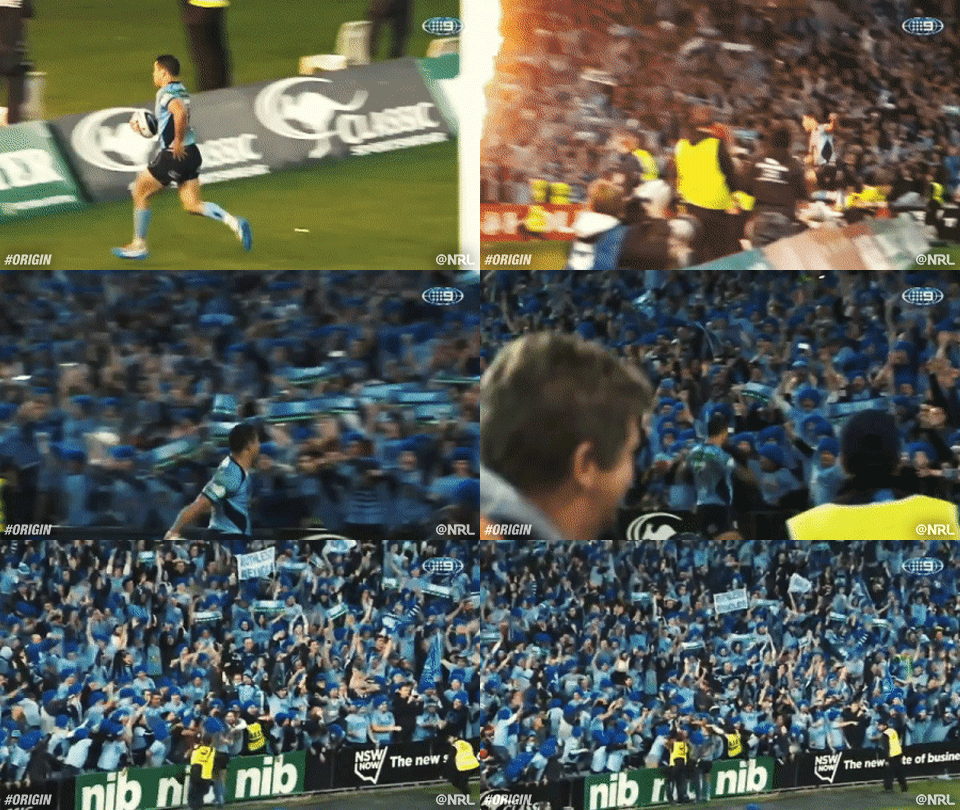
One of my fondest memories whilst being part of an audience would have to be seeing the NSW Blues win the 2018 State of Origin series live in the stadium. My mate and I were keen to attend the game as the Blues were one up in the series, and had a chance to secure it in front of their home crowd.

I watched the Blues win the series in 2014, after eight straight years of defeat, with joy in the comfort of my home. So when the opportunity arose to attend a possible series winning game after another three years of straight defeats, I jumped at it.

It was an excellent game to attend, the atmosphere was amazing. I had attended many football matches in the past, but this one took the cake in terms of energy around the stadium. What surprised me was how involved the fans became in the dying stages of the game, when the Blues were on the back foot, the crowd rose another level to ride them home to their eventual win.

The night only got better as the team huddled around the particular section of seating my mate and I were in and sang with the fans. To make it even better my mate and I realised later on that not only were we on TV, but also photographed and placed all over social media and newspapers with the team.

I think the most important thing I took away from the experience was that no matter how good the TV experience is, or watching anything after the event has taken place, you can never get the true, real time emotions and experiences unless you are apart of the live audience, seen not only in sport, but movies and TV shows as well.

Website Built with WordPress.com.

Up ↑

Design a site like this with WordPress.com
Get started